Background
Groundwater, while often unseen, is a critical component of the global freshwater supply. It represents the largest source of liquid freshwater on Earth, accounting for approximately 99% of all liquid freshwater resources[1]. This substantial reserve constitutes about one-third of the world’s total freshwater (excluding ice caps and glaciers)[2]. It plays a vital role in supporting human populations and ecosystems and provides drinking water for an estimated half of the world’s population, especially in rural areas lacking centralized water distribution systems[3]. Furthermore, approximately 25% of the water used for irrigation relies on groundwater sources[4]. Beyond its direct uses for human consumption and agriculture, groundwater sustains baseflow in rivers, supports vital ecosystems, and holds cultural significance for many communities worldwide. It also plays a crucial role in regulating both water quantity and quality.
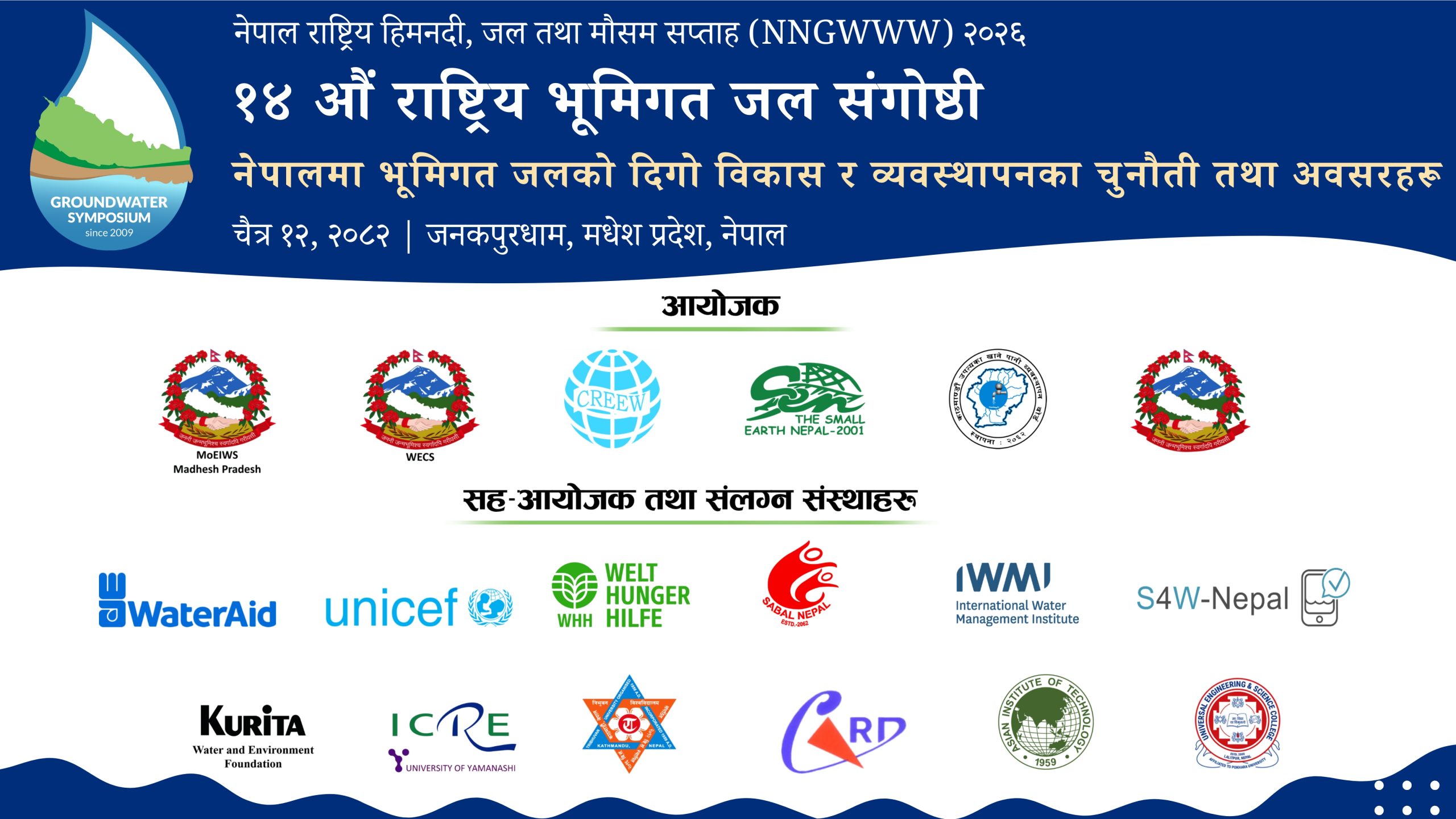
Nepal has recognized the increasing importance of groundwater resources, particularly in the face multiple stressors such as climate change, urbanization, increasing population, and impacts on surface water availability[5]. This recognition has led to active engagement in groundwater management discussions, exemplified by the annual National Symposium on “Challenges and Opportunities for Sustainable Management of Groundwater Resources in Nepal.” It was initiated in 2009 by the Center of Research for Environment, Energy, and Water (CREEW) and The Small Earth Nepal (SEN), the symposium has become a key platform for stakeholders to address groundwater-related issues[6]. Over the years, the symposium has garnered support from a diverse range of organizations, including:
- Agencies from the Government of Nepal
Kathmandu Valley Water Supply Management Board (KVWSMB), Groundwater Resources Development Board (GWRDB) (formerly), Water and Energy Commission Secretariat (WECS)
- Universities/Academic and Research Institutes/Centers
Center for Water Resources Studies (CWRS)/Institute of Engineering (IoE)/Tribhuvan University (TU), Asian Institute of Technology (AIT), Thailand, Interdisciplinary Center for River Basin Environment (ICRE), University of Yamanashi, Japan
- International NGOs
WaterAid Nepal, International Water Management Institute Nepal (IWMI Nepal), Kurita Water and Environment Foundation (KWEF), Japan
- Research-based NGOs
Environment and Public Health Organization (ENPHO), SmartPhone4Water Nepal (S4W-Nepal)
The Groundwater Symposium is held annually under the umbrella of the Nepal National Water and Weather Week (NNWWW), led by the WECS and supported by various national and international organizations. NNWWW coincides with UN World Water Day and World Meteorological Day (March 22nd and 23rd, respectively).
The symposium’s focus has evolved over time:
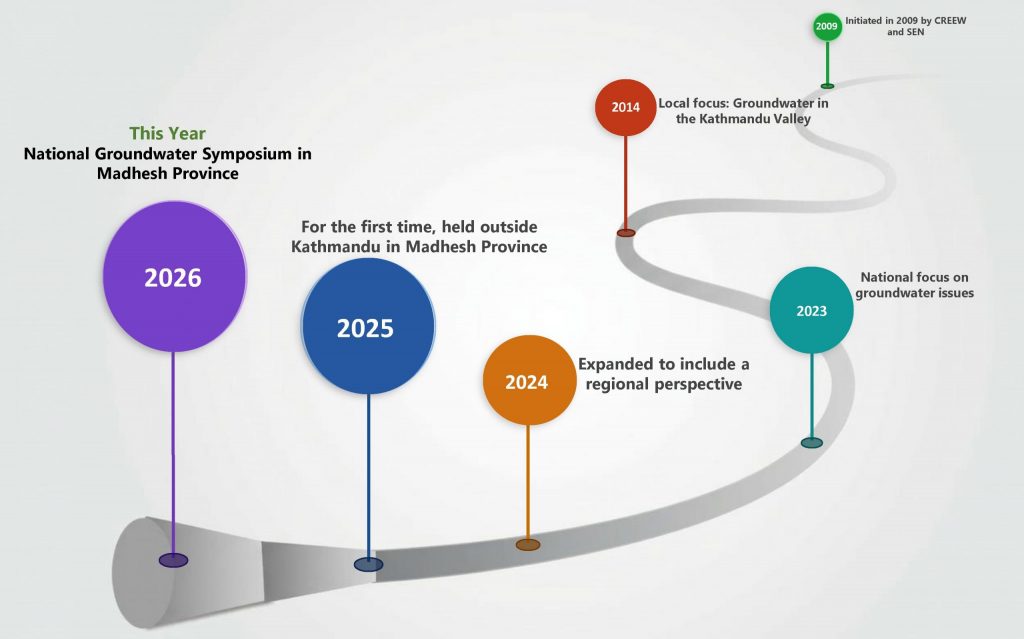
Figure 1: Evolution of the National Groundwater Symposium
Fourteenth National Groundwater Symposium draws 151 participants in Janakpurdham; policymakers, scientists, and development partners call for urgent governance reforms as province reels from historic drought.
References
[1] https://www.unesco.org/reports/wwdr/2022/en
[2] Margat, J., & Van der Gun, J. (2013). Groundwater around the world: a geographic synopsis. Crc Press.
[3] M. Smith, K. Cross, M. Paden, P. Laban (Eds.), Spring – Managing Groundwater Sustainably, IUCN, Gland, Switzerland (2016), 10.2305/IUCN.CH.2016.WANI.8.en
[4] UN World Water Development Report 2022: https://bit.ly/40HLwsX
[5] https://dwri.gov.np/un2023waterconference/Position-Paper.pdf
[6] https://www.creew.org.np/groundwater-symposium/


News & Updates
With global forecasters warning of El Niño strengtheningby more than 90% chance of being a very strong event
The Center of Research for Environment Energy and Water (CREEW), in collaboration with the Asian Institute of Technology (AIT), the Global Water
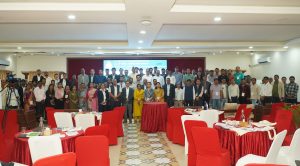
Fourteenth National Groundwater Symposium draws 151 participants in Janakpurdham; policymakers, scientists, and development
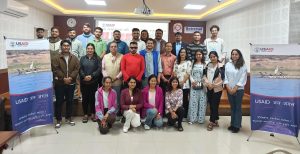
In a milestone initiative, the “Climate Change Adaptation Training for Nepalese Businesses” training program
 G.P.O. Box: 25563